
Course Catalog
Systems Architecture
- Enterprise Architecture Design
Practical, hands-on approach using real-world projects.
b. Advanced tools for architectural modeling and documentation. - Microservices and Cloud-Native Architecture
Principles and design patterns for microservices-based systems.
b. Use of technologies such as Kubernetes, Docker, and observability tools. - Serverless Architecture: Beyond Microservices
Design and scale serverless solutions using AWS Lambda, Azure Functions, or Google Cloud Functions. - Resilient and Fault-Tolerant Systems Architecture
Strategies for designing robust systems using patterns like Circuit Breaker and Bulkhead.
b. Integration of tools such as Resilience4j and Chaos Engineering. - Event-Driven Architecture and Real-Time Processing
Implementation of solutions using Apache Kafka, RabbitMQ, and event-driven patterns.
b. Applications in critical domains such as finance and telecommunications.

Technology Project Management

- Hybrid Project Management: Combining Agile and Traditional
How to integrate traditional methodologies (PMI) with agile approaches to get the best of both worlds. - Project Management Tools with Artificial Intelligence
Use of tools like Jira, Monday.com, and ClickUp enhanced with AI to optimize time and resource management. - Change Management Techniques for Digital Transformations
Leading complex technological transitions with a focus on organizational resilience and effective adoption. - Lean Strategies for Technology Project Optimization
Reducing waste in projects using Lean principles and tools such as Value Stream Mapping.
Software Development
- Software Development with Clean Code Principles
How to write clean, readable, and sustainable code using languages such as Java, Python, and C#. - Agile Development with DevOps: CI/CD in Action
Building automated pipelines using tools like Jenkins, GitLab CI/CD, and GitHub Actions. - Secure Software Development: Secure Coding Principles
Strategies to avoid common vulnerabilities such as SQL Injection, XSS, and CSRF.
b. Use of tools like OWASP Dependency-Check. - AI and ML-Based Software Development
Creating solutions that integrate artificial intelligence using frameworks such as TensorFlow, PyTorch, and scikit-learn. - Full Stack Development: From Idea to Product in Record Time
Complete design and development using modern stacks such as MERN (MongoDB, Express, React, Node.js) or PERN (PostgreSQL, Express, React, Node.js).
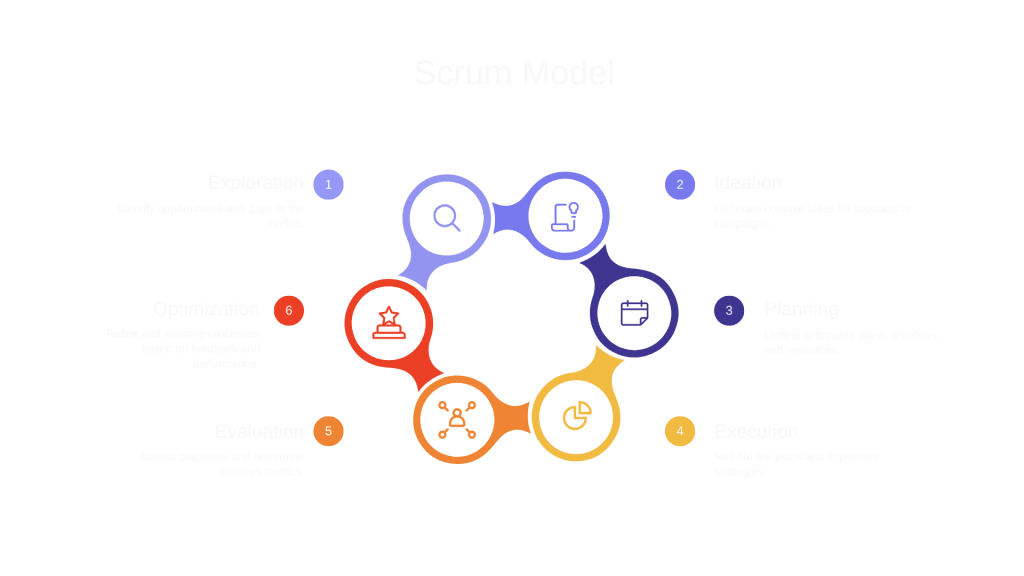
Scrum
- Scrum with Artificial Intelligence and Automation
Learn how AI-based tools can optimize sprint prioritization, estimation, and planning.
b. Automate reporting with intelligent bots integrated into Jira or Azure DevOps.
c. Use chatbots to facilitate communication among remote teams. - Product Design with Scrum: From MVP to Innovation
Strategies for creating a Minimum Viable Product (MVP) and quickly validating it with real users.
b. Integration of Design Thinking with Scrum to enhance creativity in problem-solving.
c. Tools like Figma and Miro for collaborative product ideation. - Scrum in Hybrid and Remote Environments
Implement Scrum in distributed teams using tools such as MURAL, Miro, and Microsoft Teams.
b. Adapt agile ceremonies for hybrid settings.
c. Team-building dynamics to maintain cohesion and remote engagement. - Scrum for Cross-Functional Teams
Practical approach to applying Scrum in teams with diverse skills, from development to marketing.
b. Clear roles, responsibilities, and effective collaboration in multidisciplinary projects.
c. Success stories from companies that applied Scrum beyond software development. - Scrum and DevOps: The Perfect Synergy
Integrate Scrum with DevOps practices to enhance continuous value delivery.
b. Build CI/CD pipelines aligned with the Scrum backlog.
c. Optimize workflow using tools like Docker, Kubernetes, and Jenkins. - Scrum and OKRs (Objectives and Key Results)
Align the organization’s strategic objectives with Scrum team goals.
b. How to define OKRs that boost motivation and productivity.
c. Success metrics in a Scrum-OKRs environment. - Scrum in Machine Learning Projects
Design sprints for the training, validation, and deployment of AI models.
b. How to manage uncertainty and technical challenges in machine learning projects.
c. Use of tools like TensorFlow and Data Version Control (DVC) with Scrum.